The Ekandustria facility was designed and built in-house: briquetting line, two-stage shaft furnace, blast and gas handling, PLC control and logging.
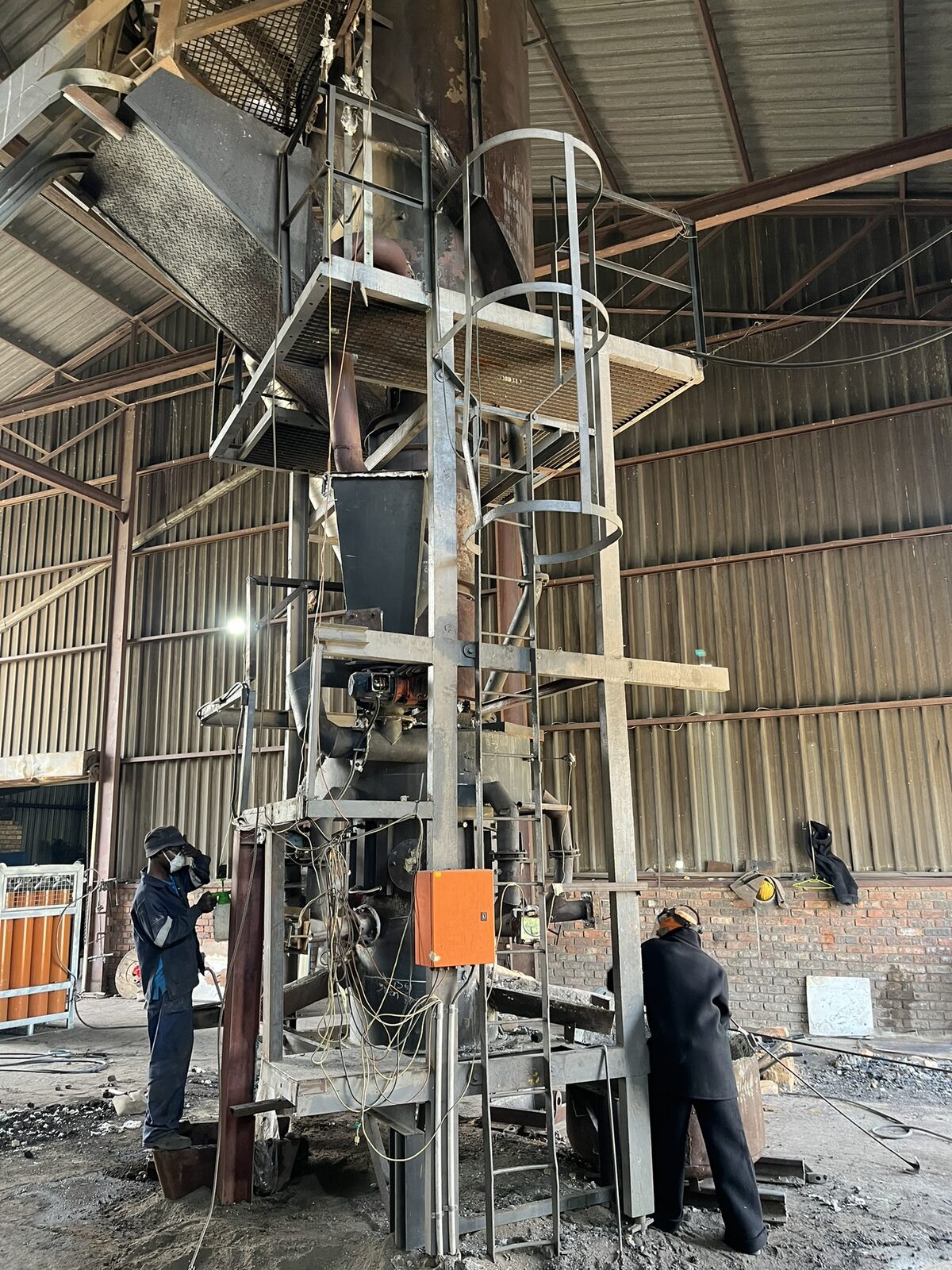
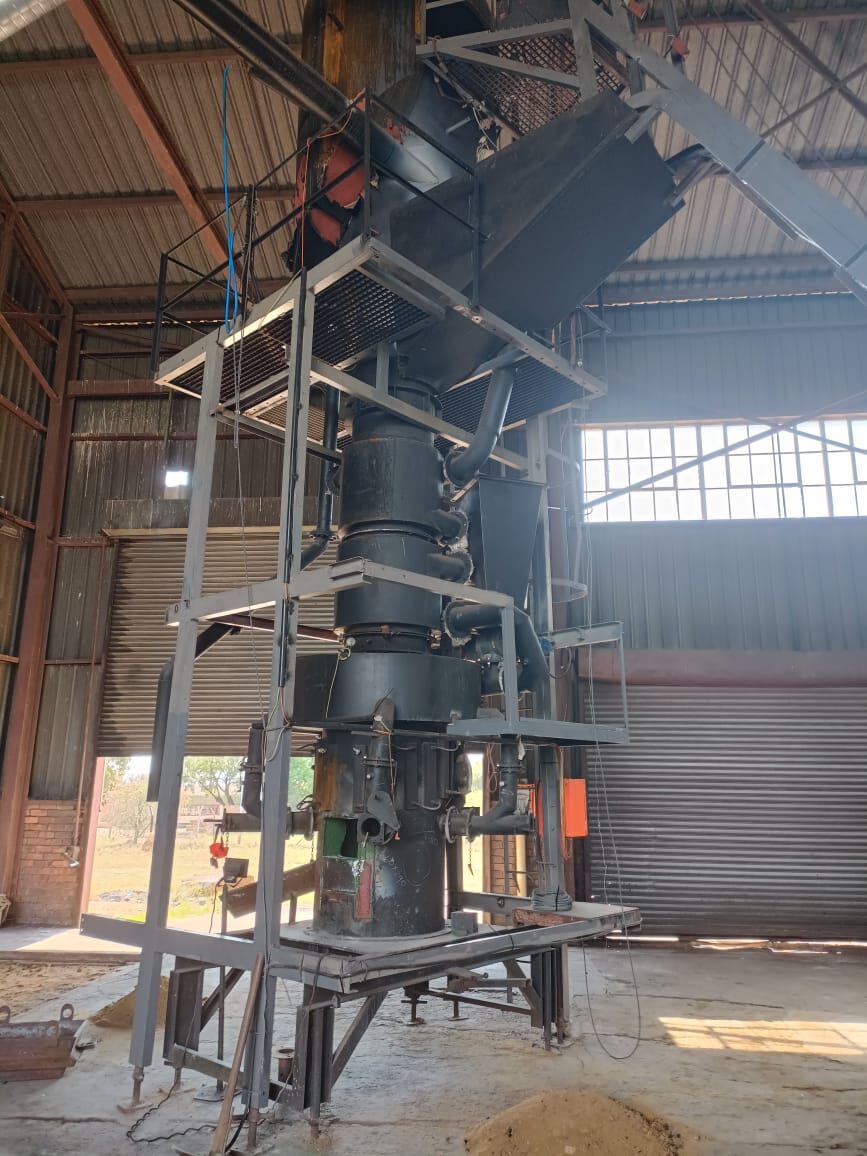
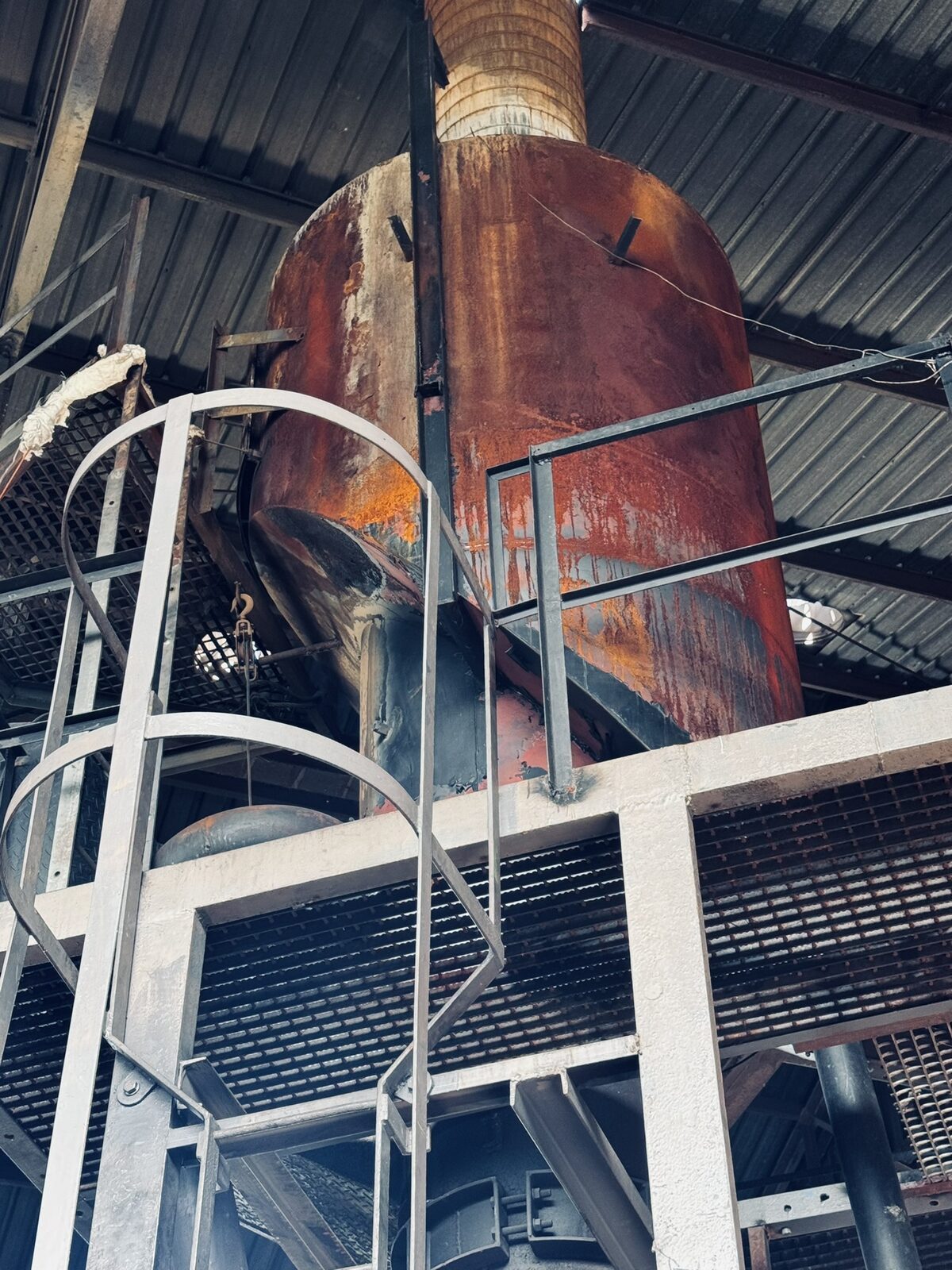
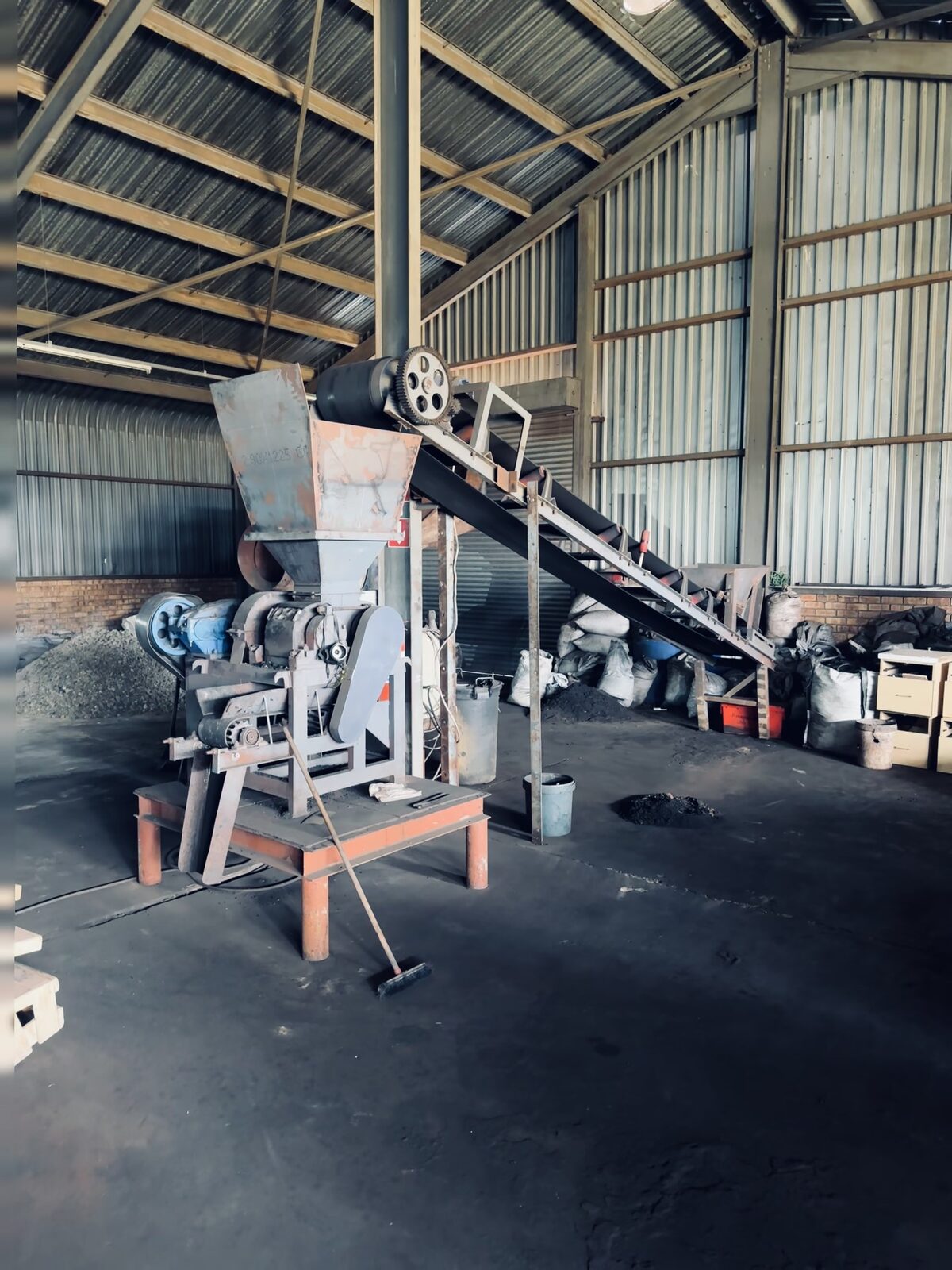

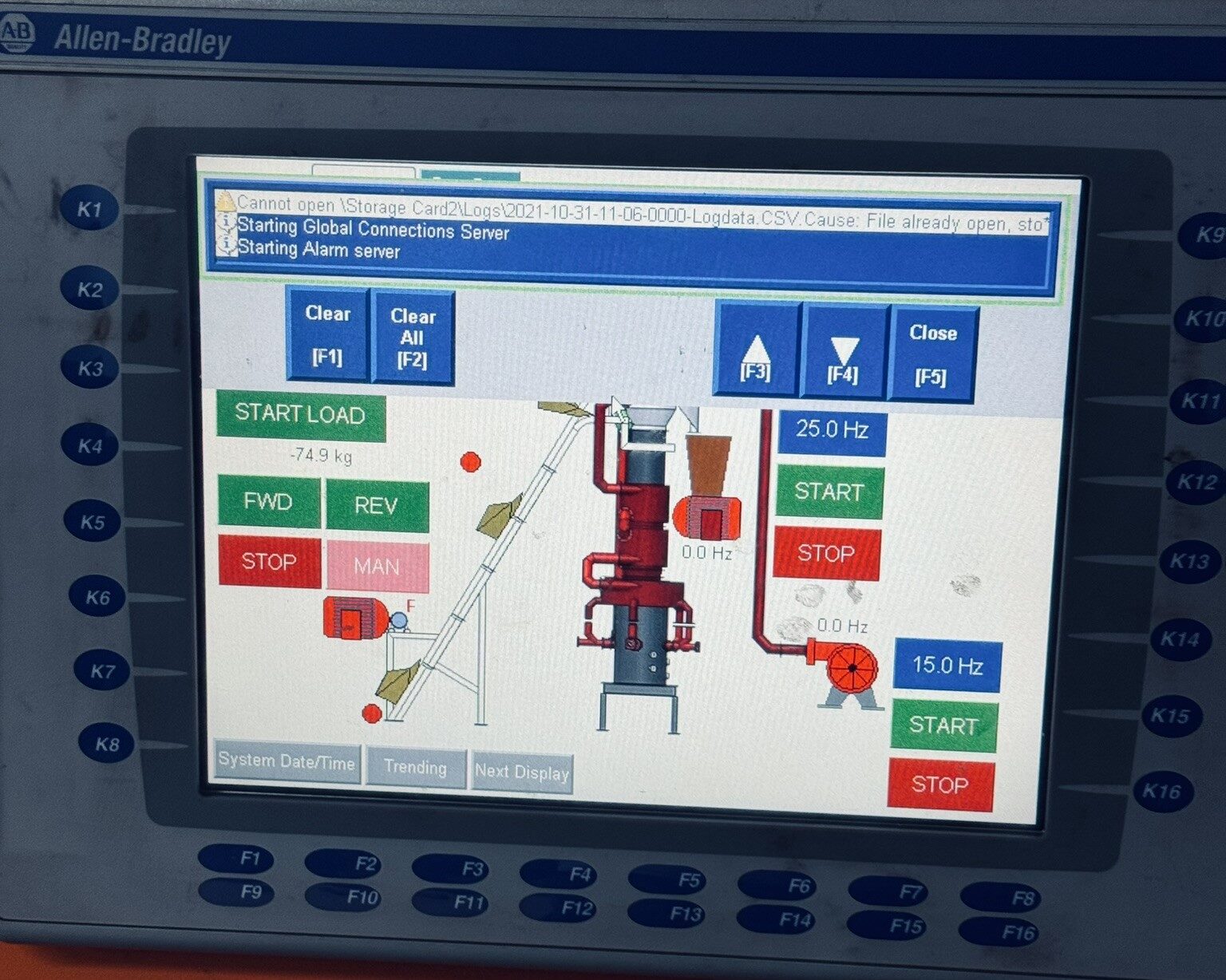
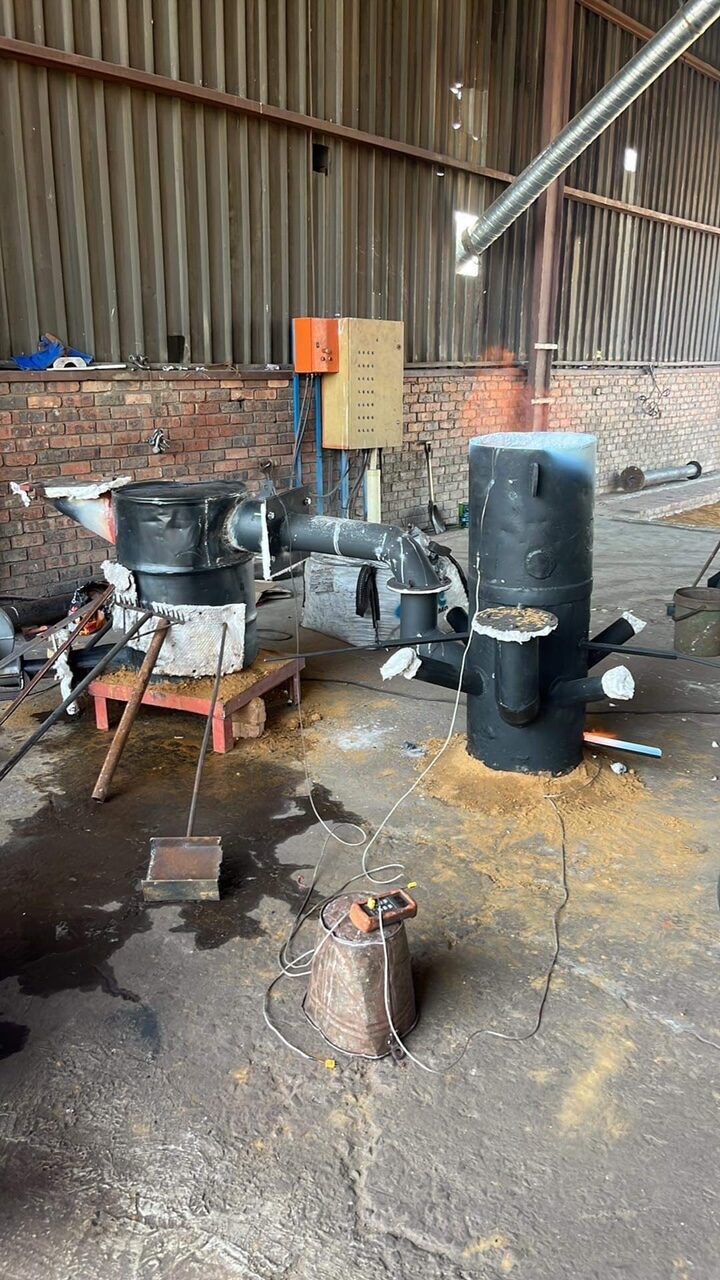
Campaigns ranged from 12 kg bench tests to multi-day pilot runs, each instrumented, logged, sampled and reconciled against the mass-and-energy balance.
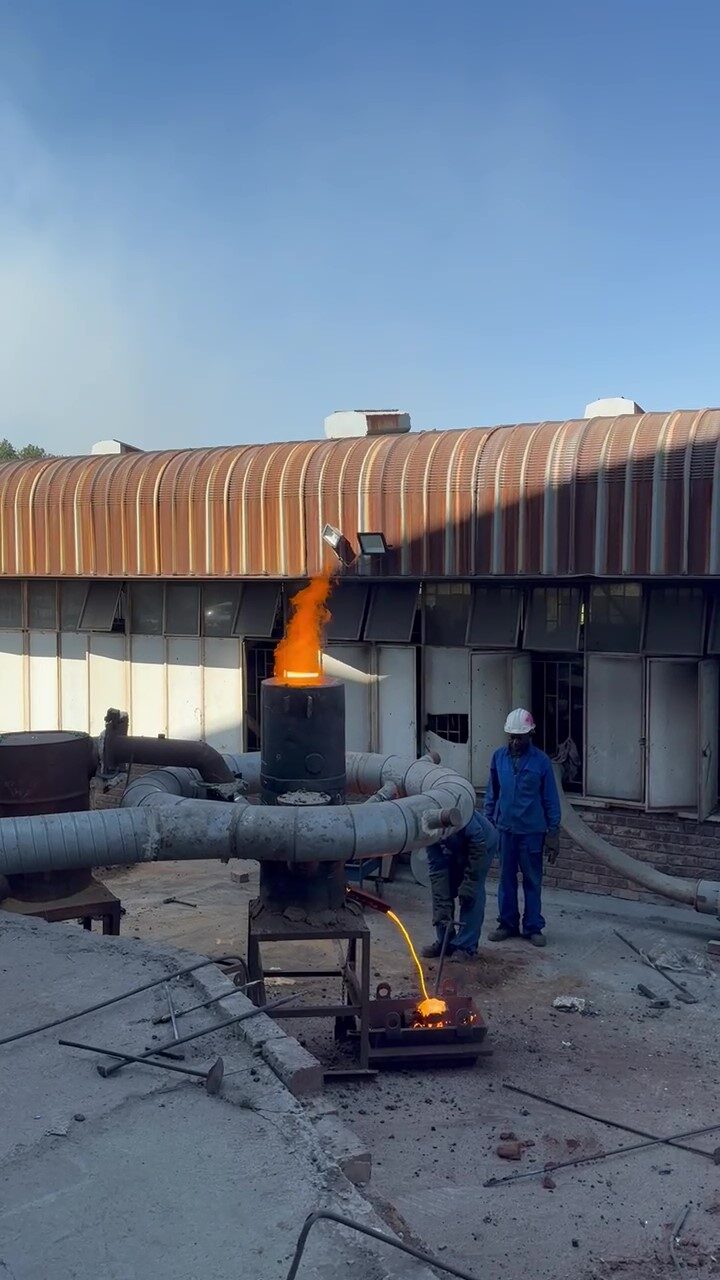
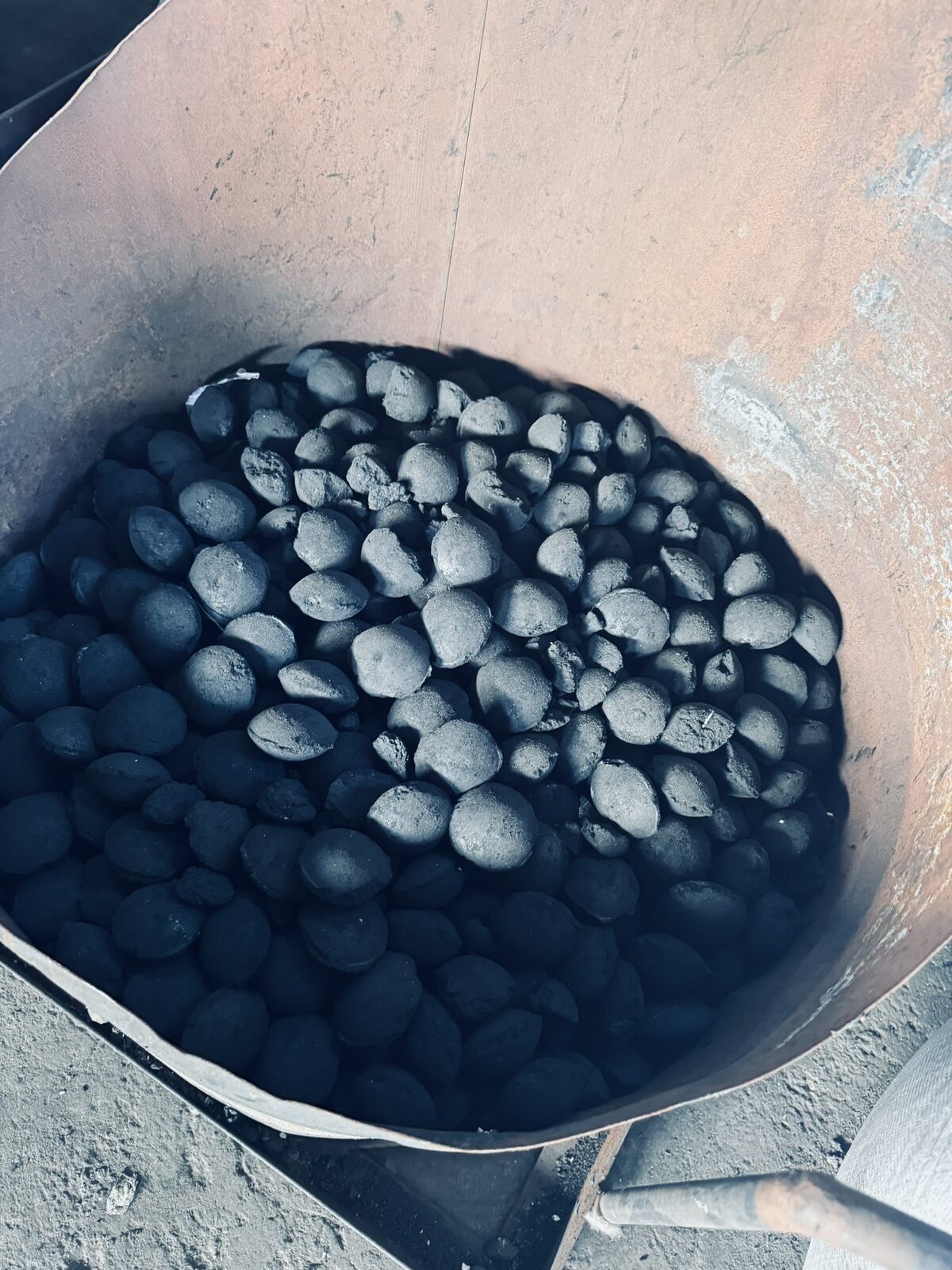
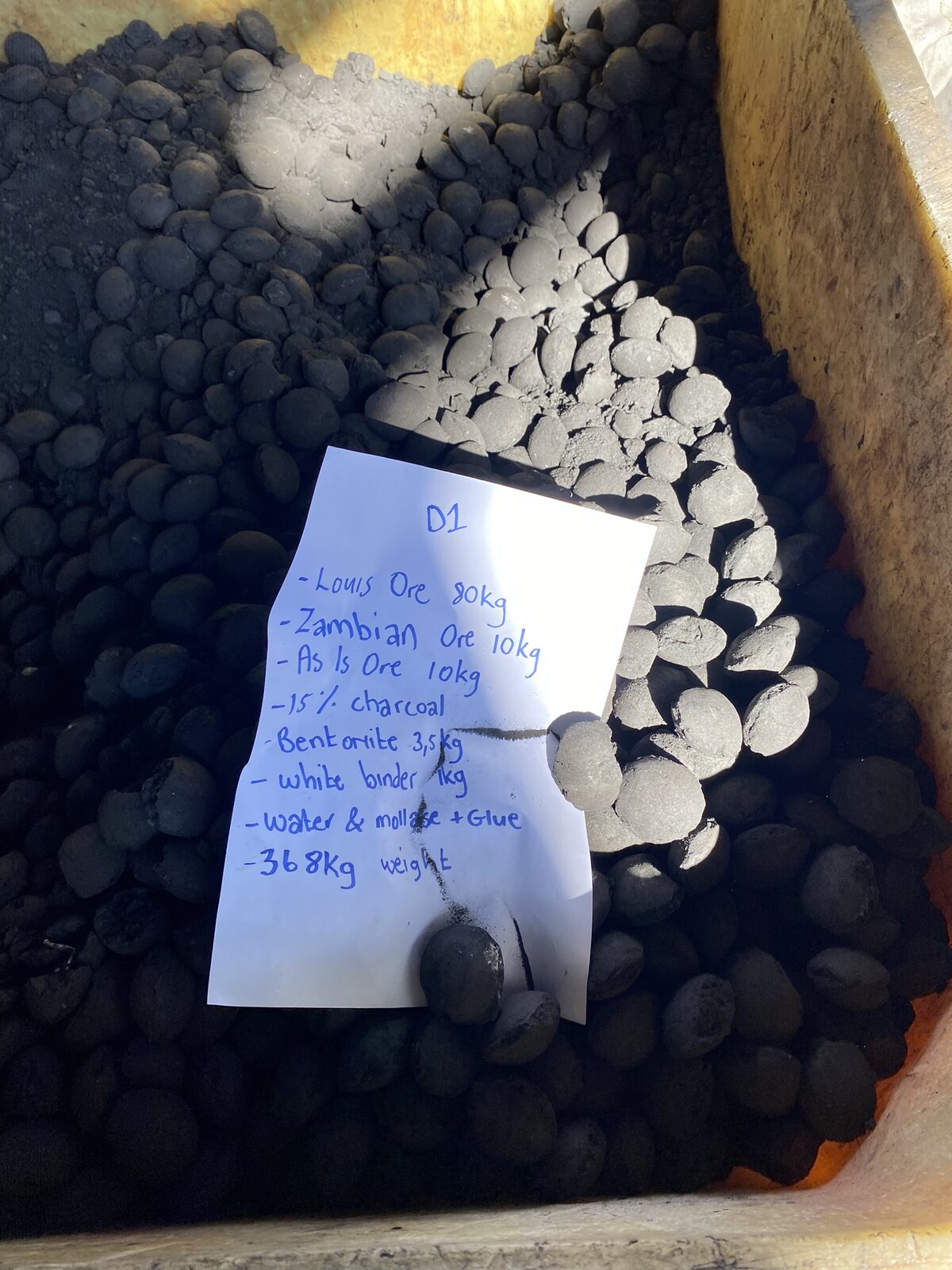
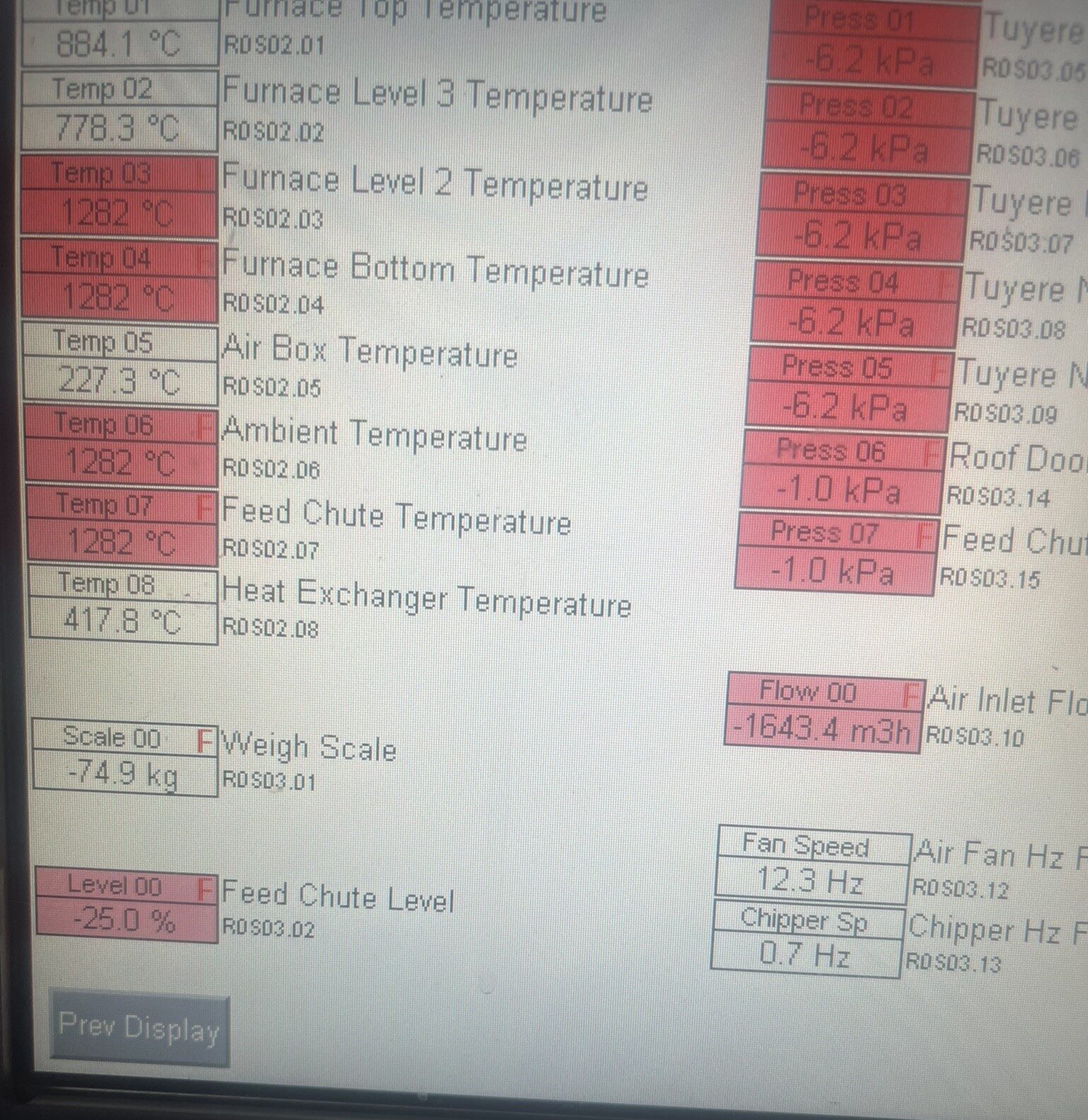
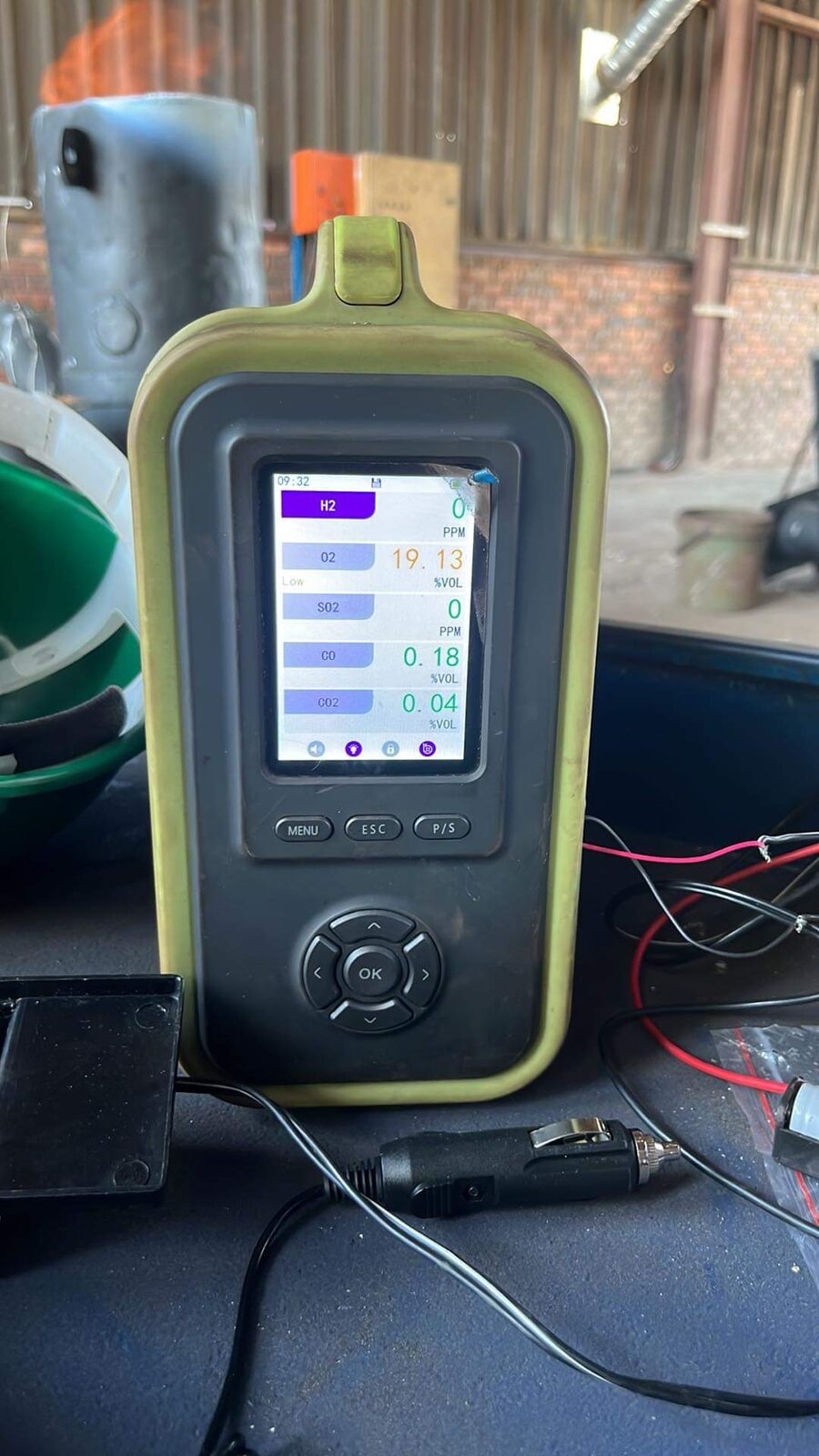


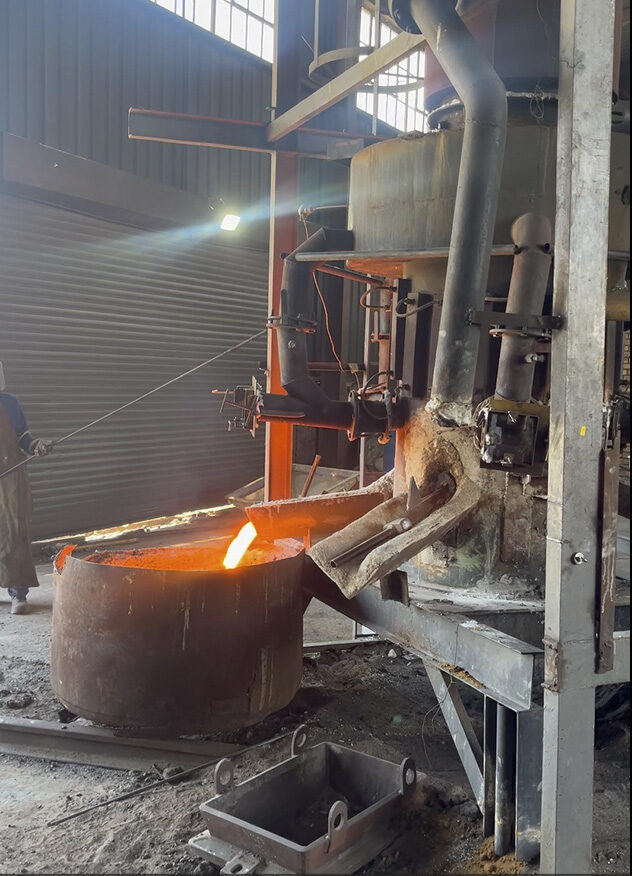
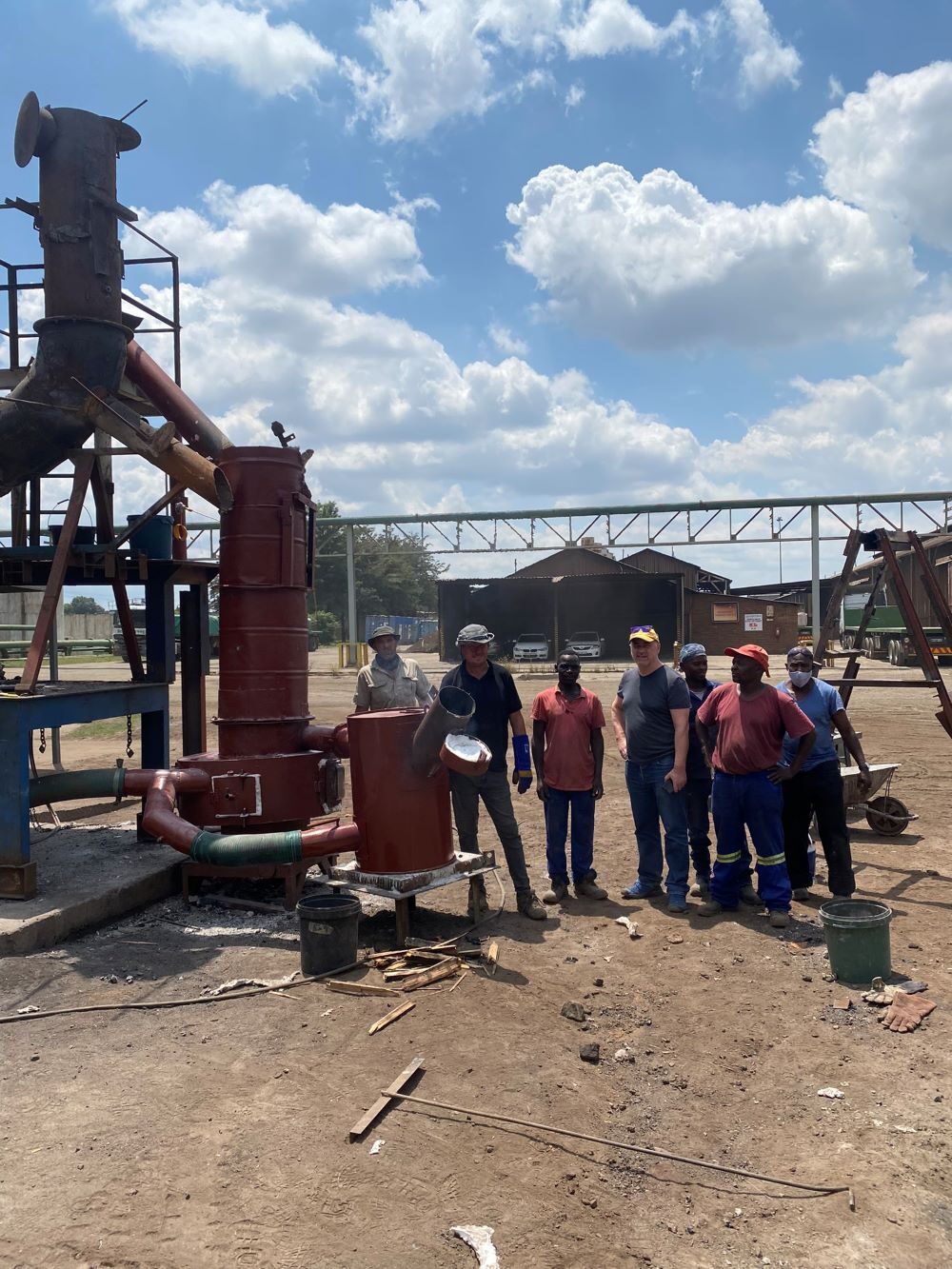
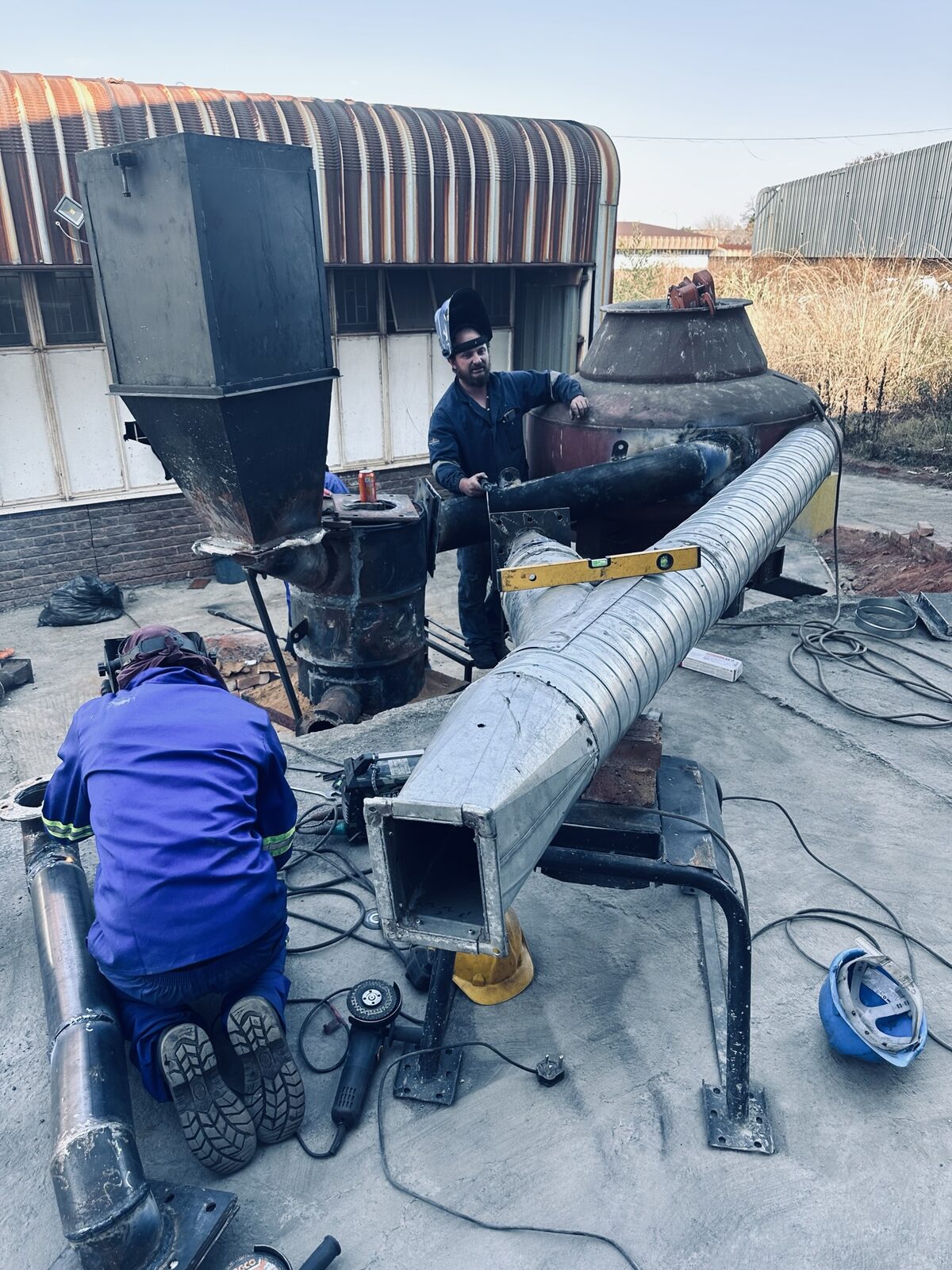
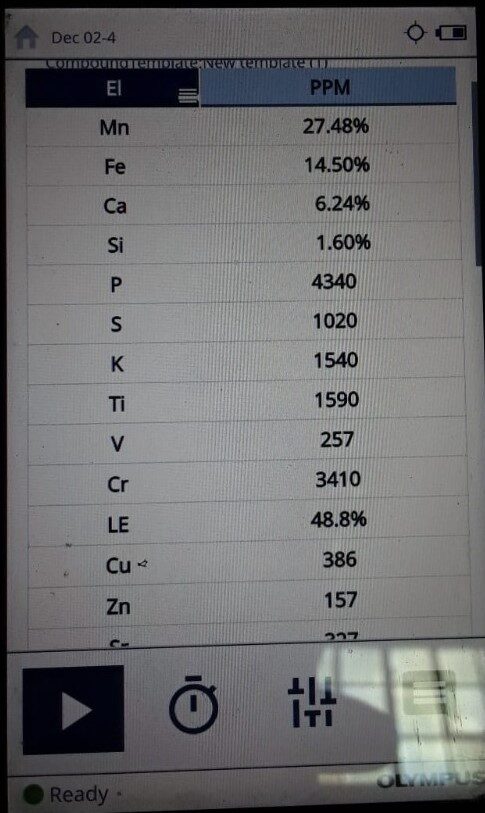
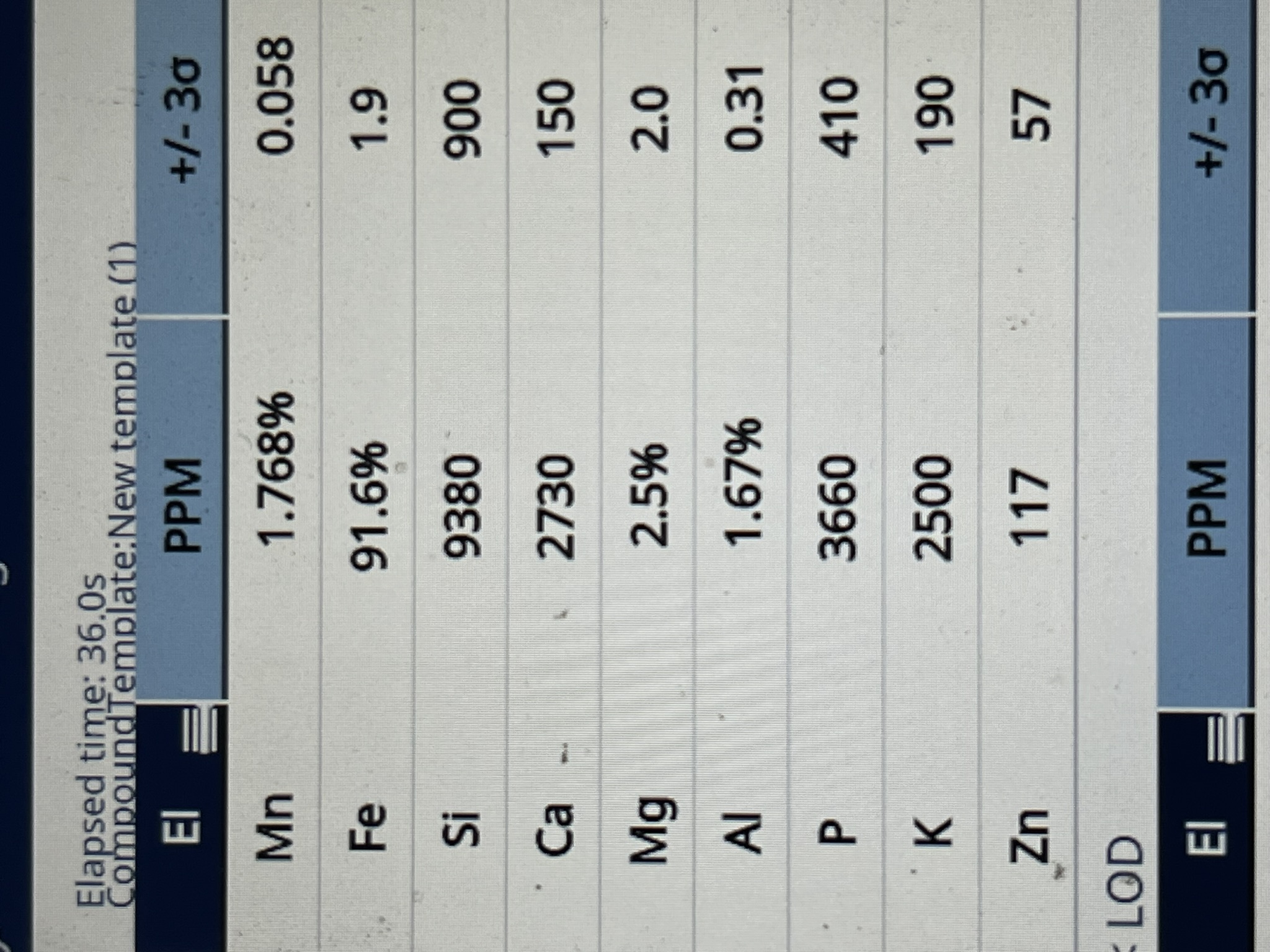
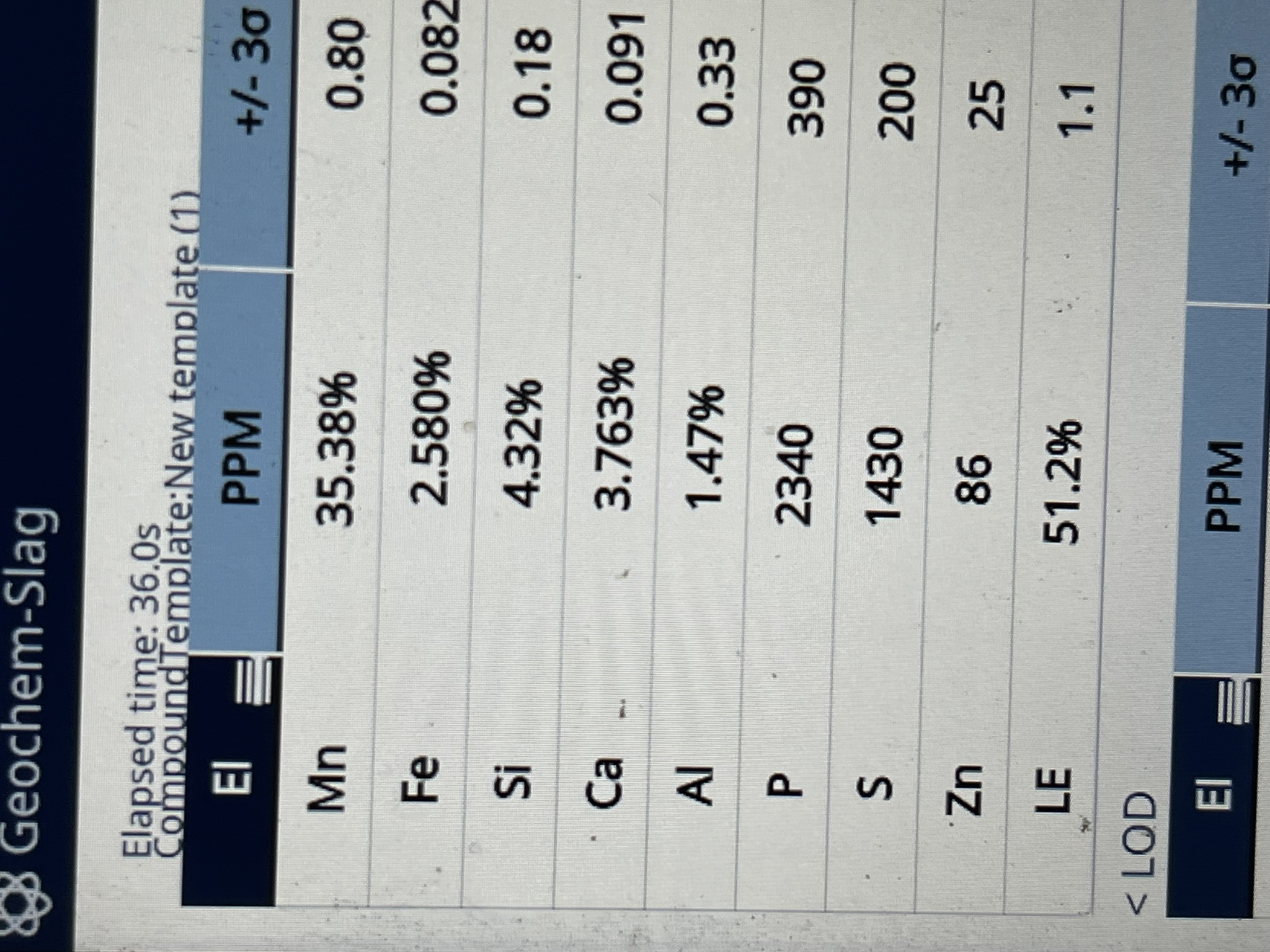
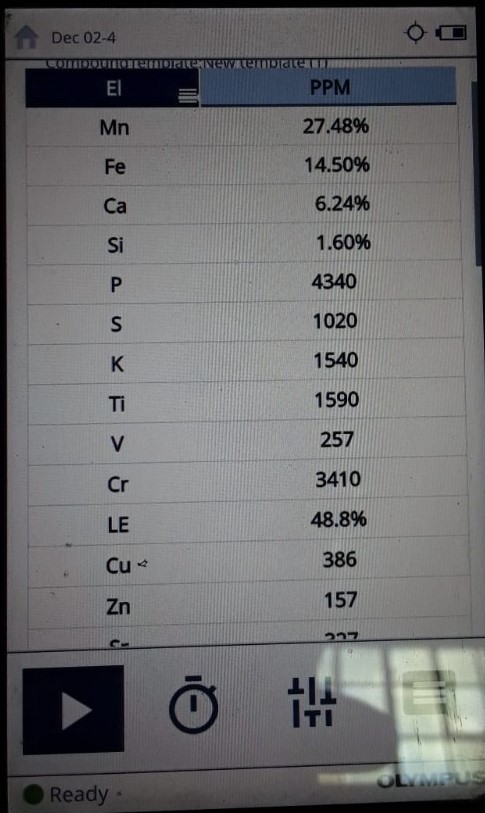
Four product routes have been demonstrated in metal: high-carbon FeMn by the shaft route; high-manganese slag and pig iron from dedicated ore campaigns; ultra-low-carbon FeMn by an aluminothermic route at production scale; and a two-product route converting high-iron manganese ore into pig iron and synthetic slag. All products were verified by XRF analysis.
Low-carbon FeMn. Separately, ultra-low-carbon FeMn was produced by an aluminothermic route at a purpose-built low-cost facility designed, constructed and operated by the team — at a sustained scale of 50 tonnes per month, and sold commercially to an international alloy trader.
High-carbon FeMn. Dedicated campaigns with ore-only recipes produced HCFeMn as the primary metal product. The shaft furnace delivered hot metal rich in manganese (analysed by XRF), with parallel campaigns on slag composition and briquette-mix design to optimise the route. The demonstrations proved both the metallurgical feasibility and the process repeatability required for scale.
The two-stage furnace was not designed in one sitting. It evolved through seven years of trials, dated below from campaign records, laboratory certificates and photographic archives. Each stage changed the design; none of the lessons was wasted.
A to Z Smelter Services founded
Founded in 2019 and initially based in Malaysia, with a single objective: ferroalloy production processes that do not depend on grid electricity. The Malaysian programme laid the technical groundwork — thermal-insulation products from FeSi baghouse dust, the first melting tests on a small shaft furnace, low-carbon FeMn by the aluminothermic route, and briquette development for shaft-furnace charging.
Relocation, first premises, and independent validation
The business relocated to South Africa in 2022, initially at the Highveld Industrial Park near Witbank, moving to its own factory at Ekandustria, Bronkhorstspruit, the following year. The thermodynamics of the process were independently reviewed and confirmed by a senior pyrometallurgist in early 2022, and the first industry investors joined the programme. Trial and study work in the same period covered pig iron from magnetite fines, copper smelting, iron-ore reduction, and chromium-ore smelting trials at the Highveld premises with an established furnace-technology partner — the shaft principle tested against four different metal systems from the outset. Low-carbon FeMn from the purpose-built aluminothermic plant was produced commercially and sold to an international alloy trader.
The two-product concept formalised
A Phase 1 development proposal — cast iron and high-manganese slag as an alternative to the electricity-based route — was documented and circulated to a panel of senior industry reviewers. The concept the 2024 campaigns would later prove in metal was on paper, costed and peer-scrutinised, eighteen months before the furnace demonstrated it.
Single-shaft furnace — iron from steel-plant residues
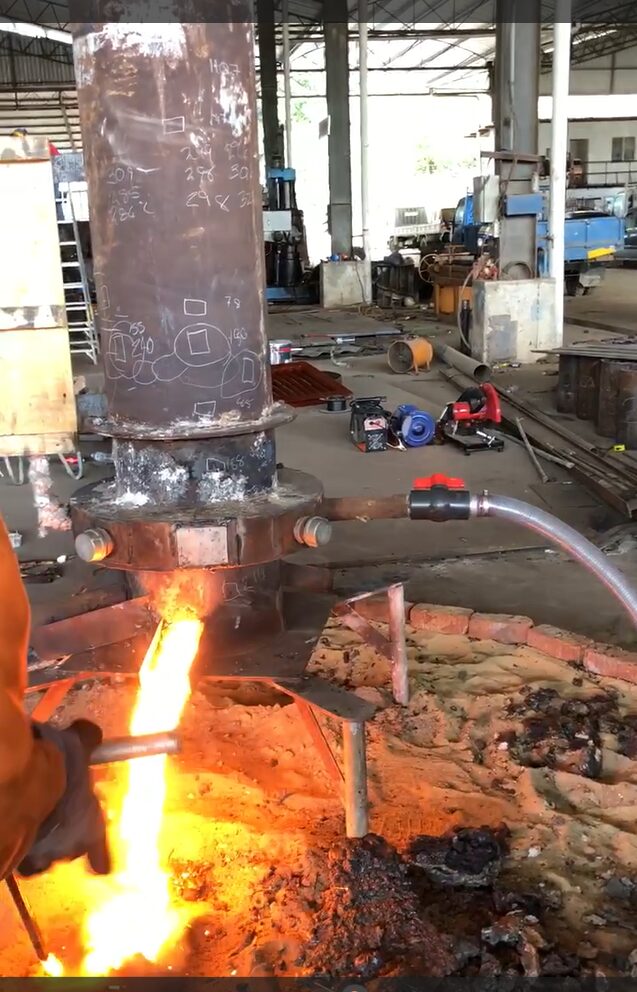
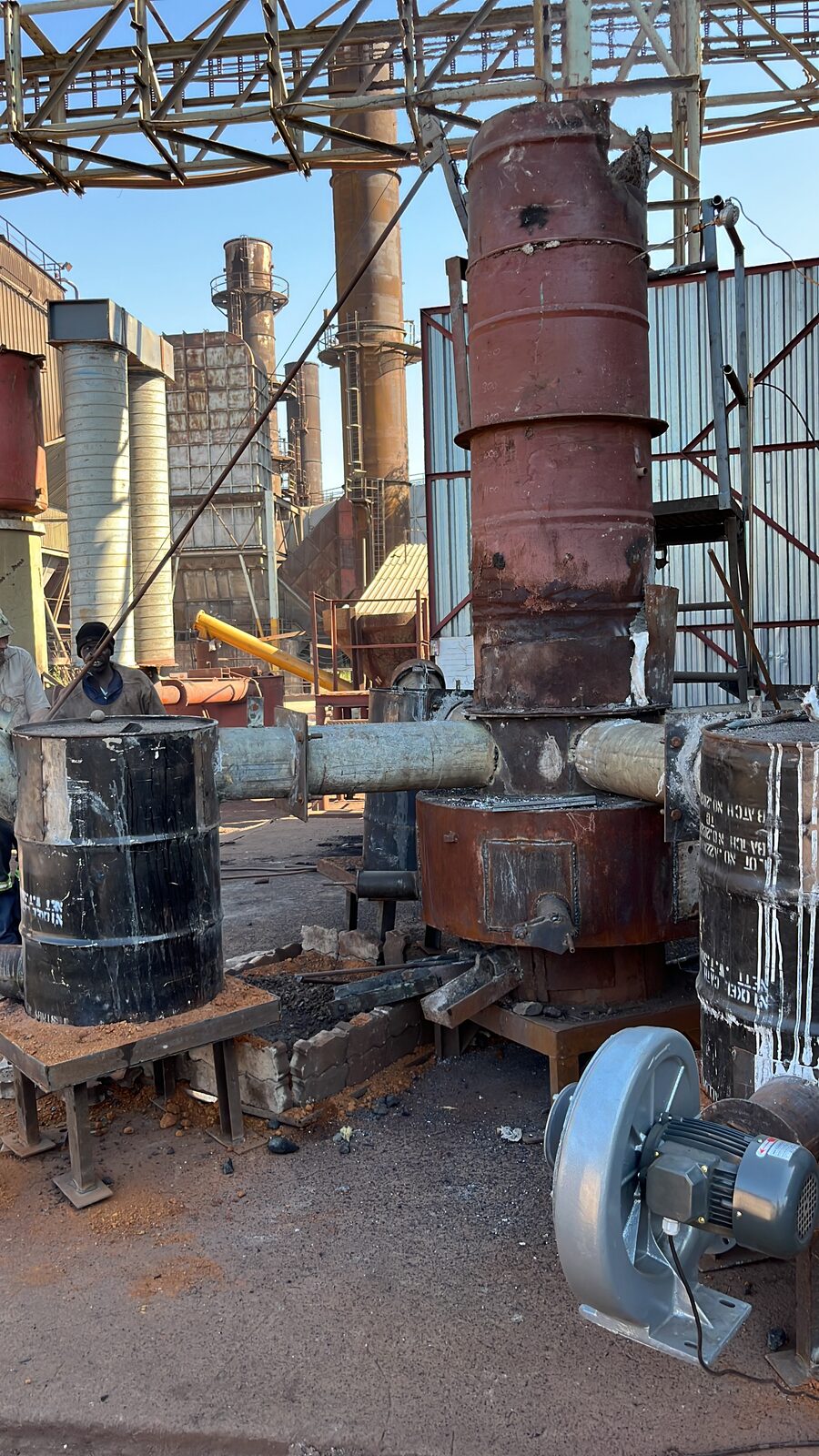
The first South African shaft furnace was built to reduce iron units from steel-plant baghouse dust and mill scale — materials with negative value to their producers. The campaigns proved carbothermic reduction in a small shaft and established the briquetting, charging and gas-handling practice on which everything later was built. A formal baghouse-dust trial for a major steel producer followed in late 2023.
Ore characterisation — high-iron manganese ore
Direct-reduction tests, off-gas analysis and microscopy on high-iron manganese ore from the Postmasburg region — the ore body that would later define the high-manganese slag route.
Pilot shaft campaigns
The pilot shaft tower entered sustained campaigning, with the single-step production of ferromanganese as the target. These campaigns delivered metal — and demonstrated the limitation that shaped the final design: in one vessel, pre-reduction and melting compete for the same space and the same gas.
Government endorsement — TIA seed funding
The Technology Innovation Agency, the South African government's technology-funding agency, approved the project for seed funding after technical review. The funding agreement for the Smelter Technology Process for Ferro-Manganese without Electricity was signed in January 2024 — independent, public-sector validation of the technology alongside the private investment already in place.
Technical feasibility demonstrated
Ferromanganese production without a submerged-arc furnace was demonstrated at pilot scale. In parallel, campaigns explored exothermic metallic additions (aluminium, silicon) to supplement in-burden energy, and a university collaboration examined briquette metallurgy, including work on stainless-plant mill-scale briquettes. The additive route worked chemically but not economically; it was set aside with the data retained.
High-manganese slag campaigns
The Postmasburg-type ore was run to remove its iron selectively: metal tapped at approximately 92% Fe, slag concentrated to approximately 35% Mn with under 1% iron. Seven slag samples were verified by ICP at an accredited laboratory in December 2024. The campaign established the two-product route: pig iron plus a synthetic manganese feedstock from a discounted ore.
Shaft–electric furnace combination concept
The high-manganese slag route was developed into a proposal: shaft-produced synthetic feed smelted in an existing electric furnace, presented to South African industry as a low-capital entry into the technology.
Consulting focus and supporting trials
Consulting engagements in Asia and South Africa, including smelter operational support and, in December 2025, a small-scale sinter trial programme executed at the Ekandustria facility for a South African producer. In the second half of 2025 the chrome-alloy work begun at Highveld in 2022–23 was revived with the same furnace-technology partner, scoping shaft-furnace and brush-arc applications for a Central Asian ferrochrome producer under contract. ULC FeMn production by the aluminothermic route continued as a separate product line.
First industrial adoption — pre-reduction ahead of a SAF
A ferroalloy producer adopted the pre-reduction furnace concept for industrial testing as a hot-feed stage ahead of an existing submerged-arc furnace — the first commercial implementation decision on the technology. The programme is currently paused by the producer's own operational circumstances; the engineering stands ready. The same pre-reduction approach applies directly to ferrochrome smelters.
The two-stage furnace — current design
The decisive step: a dedicated pre-reduction furnace mounted above the smelting furnace, with the smelting-furnace gas passed counter-current through both stages. The arrangement resolves the single-shaft limitation identified in 2023–24 and is carried by a closed mass-and-energy balance, packed-bed CFD and costed design revisions, refined through 2026. Detailed engineering is in progress.
Everything currently in the images folder, listed automatically. To add or remove items here,
just add or delete the file in the images folder, then double-click
Update Gallery.bat (in this website folder) and refresh this page — no editing required.
Updates on the programme, posted as PDFs, grouped by topic. To add a new item, drop a PDF
into a subfolder of the news folder — the subfolder name becomes the heading it appears under
(e.g. news\Transalloys\update.pdf appears under a "Transalloys" heading). PDFs dropped directly
into news with no subfolder appear at the top, ungrouped. Double-click
Update News.bat, then refresh this page — no editing required.